
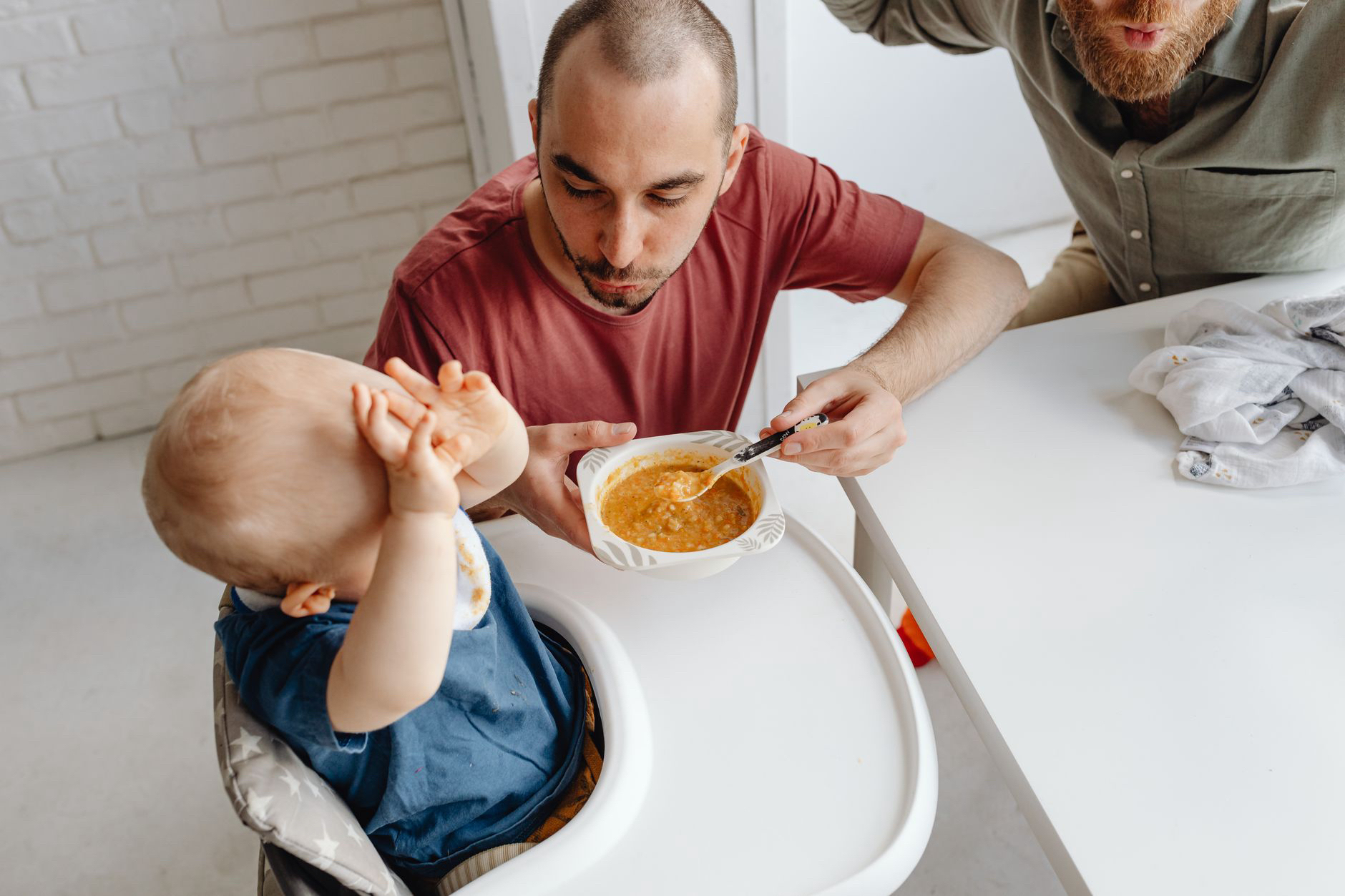
One minute your baby is happily drinking milk, and the next you’re wondering whether they’re ready for a Sunday roast! Welcome to the world of weaning!
Starting solids is an exciting milestone, but it can also feel a little overwhelming. What foods should you introduce first? How much should your baby eat? And what’s the difference between baby-led weaning and traditional weaning?
Don’t worry – we’ve got you covered!
When should my baby start solids?
In the UK, the NHS recommends introducing solid foods at around six months, alongside breast milk or first infant formula.
Before starting, look out for these three signs that your baby is ready:
- They can stay in a sitting position and hold their head steady.
- They can coordinate their eyes, hands and mouth to pick up food and bring it towards their mouth.
- They can swallow food rather than automatically pushing it back out with their tongue.
Remember, chewing their fists, waking more at night or wanting extra milk are not signs that your baby is ready for solids.
What foods should I introduce first?
There is no perfect first food! The aim is to introduce a variety of flavours and textures.
Some lovely first foods include:
- Vegetables: Broccoli, sweet potato, carrots and avocado.
- Fruit: Banana, pear, mango and soft-cooked apple.
- Protein: Well-cooked eggs, lentils, beans, chicken and fish without bones.
- Iron-rich foods: Meat, beans, lentils and iron-fortified baby cereals.
- Dairy: Full-fat, pasteurised yoghurt and cheese.
Try to include iron-rich foods regularly, as your baby’s iron requirements increase around this age.
Baby-led weaning or traditional weaning?
There are two popular approaches to introducing solids:
Baby-led weaning (BLW) involves offering appropriately prepared finger foods that your baby can pick up and feed themselves.
Traditional weaning usually involves starting with mashed, puréed or soft foods offered on a spoon.
You don’t have to choose just one! Many parents combine both approaches, allowing their babies to explore different textures while practising self-feeding.
Foods to avoid and safety tips
A little reminder: not every food is suitable for little tummies!
- No honey before 12 months because of the risk of infant botulism.
- Avoid adding salt or sugar to your baby’s food.
- Avoid whole nuts, whole grapes and other choking hazards. Grapes and similar round foods should be cut lengthways into quarters.
- Avoid foods containing raw or undercooked eggs, meat and fish.
- Cow’s milk should not be given as a main drink before 12 months, although pasteurised cow’s milk can be used in cooking and full-fat dairy can be offered.
Always supervise your baby while eating, ensure they are sitting upright and learn the difference between gagging and choking.
What about food allergies?
Introduce common allergenic foods, such as eggs, peanuts (as smooth peanut butter or finely ground peanuts), dairy, wheat and fish, from around six months, one at a time and in small amounts.
If tolerated, continue offering them regularly.
If your baby has severe eczema, an existing food allergy or a strong family history of allergies, speak to your health visitor or GP for individual advice.
How much should my baby eat?
Here’s the important bit: don’t panic about portion sizes!
At the beginning, your baby may only manage a few teaspoons or a couple of mouthfuls. That’s absolutely fine.
Milk remains their main source of nutrition during the early stages of weaning. Gradually increase the variety, amount and frequency of food as your baby develops.
Follow your baby’s hunger and fullness cues rather than encouraging them to finish everything on their plate.
A little reminder for parents ❤️
Weaning isn’t a race, and your baby doesn’t need to love broccoli on the first attempt!
Some foods may need to be offered several times before your baby accepts them. Expect mess, funny facial expressions, food on the floor and plenty of learning along the way.
The goal isn’t to create a perfect little eater overnight. It’s to build a positive relationship with food, one mouthful at a time.
The Early Years Bridge tip: Let your baby explore, touch, smell and taste different foods. Mealtimes are about so much more than eating – they’re an opportunity to develop independence, coordination, sensory awareness and curiosity!
For more guidance, visit the NHS Start for Life weaning advice: https://www.nhs.uk/start-for-life/baby/weaning/

Leave a Reply