
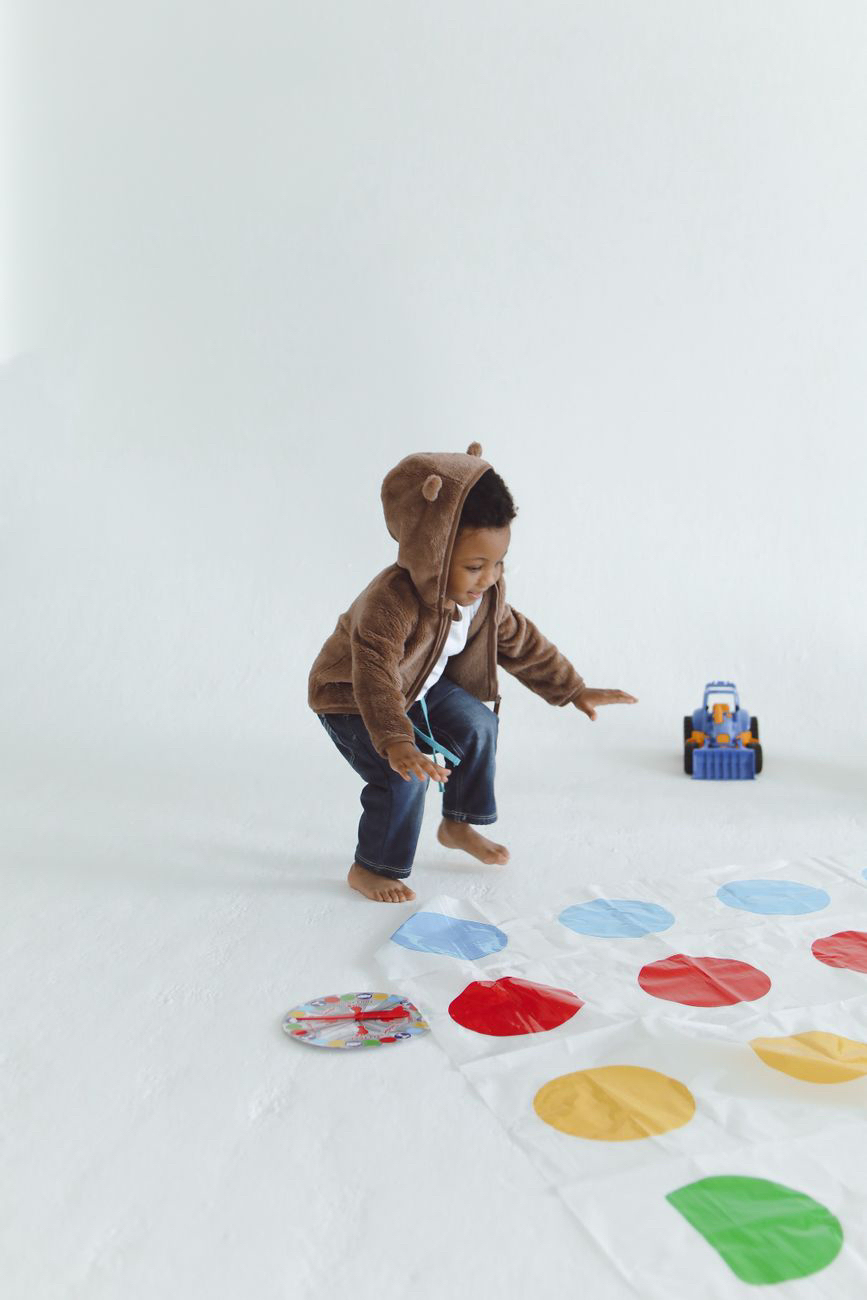
And Why Your Toddler Won’t Sit Still!
Have you ever wondered why your toddler can climb onto the sofa, jump off it, run around the living room like they’re training for the Olympics, but struggles to put on their own socks?
Or why they can pick up the tiniest crumb from the floor (usually one you’ve already hoovered!) but find holding a pencil rather tricky?
Well, there’s a reason for that!
Children are constantly learning how to move, control and coordinate their bodies. Two important parts of this development are gross motor skills and fine motor skills. So, let’s break them down!
What are gross motor skills?
Think BIG movements!
Gross motor skills involve using the large muscles in the body, particularly those in the arms, legs, back and tummy. These muscles help children move around, balance, maintain posture and explore the world.
Examples of gross motor skills include:
- Crawling across the living room to reach their favourite toy.
- Walking, running and jumping.
- Climbing stairs and playground equipment.
- Kicking and throwing a ball.
- Dancing to their favourite nursery rhyme.
- Balancing on one foot (even if it looks more like they’re about to topple over!).
Gross motor development starts from infancy, with babies gradually learning to lift their heads, roll, sit, crawl and eventually walk. As children grow, their movements become more controlled, coordinated and confident.

Why are gross motor skills important?
They help children:
- Develop strength, balance and coordination.
- Build confidence when exploring their surroundings.
- Develop spatial awareness and understand how their bodies move.
- Build foundations for everyday activities such as sitting at a table.
Did you know?
Gross motor skills also help children with handwriting and sitting with good posture in class (ie not slouching) because the core muscles need to be well developed in order for them to be comfortable sitting upright in s writing position.
What are fine motor skills?
Now think small movements!
Fine motor skills involve using the smaller muscles, particularly in the hands and fingers, to carry out precise and controlled movements. These are the skills that help children do all those fiddly little things that adults often take for granted like turning the pages of a book or doing buttons.
Other examples of fine motor skills include:
- Picking up small objects using their fingers.
- Holding crayons and making marks on paper.
- Stacking blocks and building towers.
- Using a spoon and fork.
- Threading beads.
- Doing up buttons and zips.
- Using child-friendly scissors.
- Drawing shapes and eventually writing letters.

Why are fine motor skills important?
They help children:
- Become more independent with eating and dressing (think doing buttons and tying shoe laces)
- Build confidence when completing everyday tasks. (Think opening bottles lids and lunchboxes)
- Develop the foundations needed for writing.
- Develop hand-eye coordination.
- Improve concentration, precision and problem-solving.
So here’s a simple way to remember:
Gross motor = BIG movements.
Fine motor = small, controlled movements.
Four fun ways to develop these skills at home
The good news? You don’t need expensive toys, complicated equipment or a degree in child development to support your child’s motor skills.
Some of the best learning opportunities happen during everyday play!
1. Create an indoor obstacle course (Gross motor)
Use cushions, tunnels, blankets and safe stepping stones to create a mini adventure. Encourage your child to crawl, climb, step over and balance.
Skills developed: Gross motor coordination, balance and body awareness.
2. Get creative with playdough (fine motor)
Squashing, rolling, squeezing and pinching playdough are fantastic ways to strengthen little fingers and hands.
Here’s a mini guide on how to make play dough at home:
Skills developed: Fine motor control, finger strength and coordination.
3. Have a little dance party (gross motor)
Put on your child’s favourite music and encourage them to jump, clap, spin, stomp and copy your movements.
Warning: You may be asked to perform the same dance approximately 47 times!
Skills developed: Gross motor coordination, balance and body control.
4. Try a simple posting or sorting activity (fine motor)
Give your child some large, age-appropriate objects and a container. Encourage them to pick up, sort and post the objects into different spaces. Always supervise and avoid small objects that could pose a choking risk.
Skills developed: Fine motor control, hand-eye coordination and concentration.
Should I be worried if my child isn’t doing these things yet?
Every child develops at their own pace, and motor skills don’t develop in exactly the same way or at the same time for everyone. Some children will be climbing everything in sight, while others may prefer quieter activities such as puzzles or drawing. It’s important to remember that development isn’t a race, and children don’t need to master every skill at the same age.
However, if you notice that your child is consistently struggling with movements or everyday tasks, seems unusually unsteady, avoids using one side of their body, or loses skills they previously had, it’s worth discussing your concerns with your health visitor or GP who may then make a referral to someone like an occupational therapist.
You don’t have to wait until a routine appointment to ask questions. If something doesn’t feel right, it’s always okay to seek advice. You can speak to one of our early years professionals right here at The Early Years Bridge directory.
So remember…Big movements, little movements and everything in between all contribute to your child’s development. So next time your little one is running around the house, building a tower that keeps falling down or spending 20 minutes trying to put on one sock, remember: they’re not just playing. They’re learning!

Leave a Reply